
24/07/2026
Ottawa, Ontario — Friday July 24, 2026
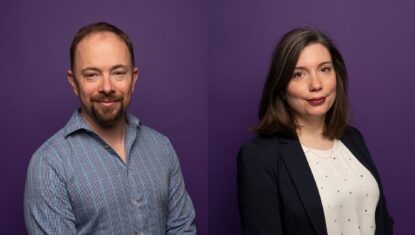
From developing novel immunotherapy approaches to fight cancer to evaluating accessible interventions for youth with persistent concussion symptoms, two CHEO researchers are advancing innovative research with support from the CIHR Spring 2026 Project Grants.
Dr. Shawn Beug, Scientist, and Dr. Andrée-Anne Ledoux, Senior Scientist, were both awarded CIHR project grants – with Dr. Beug the first ever CHEO Research Institute researcher to receive funding for two separate CIHR project grants in the same competition.
“CIHR Project Grant funding is among the most competitive research funding in Canada, and this success is a tremendous milestone for both Dr. Ledoux and Dr. Beug as they continue to grow and advance their research programs,” said Dr. Jason Berman, CEO and Scientific Director, CHEO Research Institute, and Vice-President Research, CHEO. “Dr. Beug’s success is particularly remarkable, becoming the first researcher to secure funding for two projects in a single CIHR Project Grant competition at the CHEO Research Institute. This accomplishment reflects not only the strength of his research program, but also the world-class science being conducted at the CHEO RI.”
The CHEO Research Institute is one of the top 25 research hospitals in Canada. The CHEO Research institute placed 2nd among small-tier research hospitals in Canada, up from 7th last year, thanks to a 16.5% increase in research spending (FY2023-24) according to the national Research InfoSource rankings.
The CHEO Research Institute achieved a success rate of 18.8% for their CIHR Spring Project Grant applications, exceeding the national average of 13.1%.
CIHR Spring 2026 Project Grants
Unlocking T cell therapy for pediatric brain tumors
Amount/duration: $1,181,926 over 5 years
Nominated Principal Investigator: Shawn Beug
Co-Applicants: Tommy Alain, Eric Lacasse, Albert Tu
Summary: Pediatric high-grade gliomas are aggressive brain tumors that affect children and adolescents. Even with surgery, radiation, and chemotherapy, many patients still have limited options and poor outcomes. New approaches are thus urgently needed. One promising approach uses the patient’s own immune system to fight the tumor. In particular, tumor infiltrating lymphocytes, which are immune cells already found inside the tumor, can be expanded in the lab and returned to the patient to target and destroy tumor cells. However, high-grade gliomas often create a hostile environment that prevents tumor infiltrating lymphocytes from entering and eradicating tumor cells. Our overall goal is to deliver a safe and effective immune-based therapy option for children and adolescents with high-grade gliomas. Our project tests whether adding of a class of drugs with immune-changing properties can remove these roadblocks and make tumor infiltrating lymphocytes more practical and effective for children. These drugs are designed to weaken cancer cell survival defenses and to “wake up” anti-tumor immunity. There are three goals: (1) make high-grade glioma tumors more receptive to attack by tumor infiltrating lymphocytes, (2) increase the yield and quality of tumor infiltrating lymphocytes derived from these tumors, and (3) test whether expanded tumor infiltrating lymphocytes can eliminate high-grade gliomas.
Small molecule enhancement of immune cell function to drive anti-cancer responses
Amount/duration: $1,178,100 over 5 years
Nominated Principal Investigator: Shawn Beug
Co-Applicants: Tommy Alain, Eric Lacasse, Luc A Sabourin
Summary: Harnessing the body’s own immune system to fight cancer is one of the most promising advances in modern medicine. However, there are few reliable treatments that boost the immune system’s ability to eliminate cancer cells. In breast cancer, this need is urgent: it is among the most common cancers and aggressive subtypes, such as triple negative breast cancer, often lack targeted options and recur after treatment. Many breast tumors also create an environment that keeps immune cells out or shuts them down, which limits the impact of immune-based therapies. Our research focuses on a class of medicines called SMAC mimetics, which block proteins that help breast cancer cells survive. These medicines not only weaken cancer cells but also help the immune system find and attack cancer cells. Research shows that SMAC mimetics can strengthen immune responses against cancer and virus-infected cells, while selectively targeting tumors and sparing healthy tissue. This makes them attractive candidates for hard-to-treat breast cancer. In this project, we will explore how SMAC mimetics affect immune cells in breast tumors and test whether they can improve the effectiveness of cancer immunotherapy. First, we will study how SMAC mimetics change the breast cancer environment to make it more receptive to immune attack. Second, we will test whether SMAC mimetics can help expand immune cells from patient tumors for use in personalized therapies. Finally, we will determine whether SMAC mimetics can boost the ability of these immune cells to kill cancer cells in the body. Our ultimate goal is to create new combination strategies that empower the immune system to detect and destroy breast cancer more effectively, offering new hope for patients with hard-to-treat tumors such as triple-negative breast cancer.
Characterizing blood-brain barrier permeability and its association with brain health, blood biomarkers, symptoms and mood after a pediatric concussion
Amount/duration: $1,090,125 over 4 years
Nominated Principal Investigators: Andrée-Anne Ledoux, Alon Friedman, James S Hutchison
Co-Applicants: Nicholas Barrowman, Andrew Lapointe, Gerd E Melkus, Veronik Sicard, Reggie Taylor, Ashley L Ware, Keith O Yeates, Roger Zemek
Summary: Concussion is a common injury in children and adolescents, affecting over 1.5 million youth in North America each year, with rates rising dramatically over the past decade. While most children recover within four weeks, about one-third continue to experience symptoms-including headaches, dizziness, trouble concentrating, mood changes, and sleep problems-that can last for months and interfere with school, social life, and sports. Currently, we lack reliable ways to diagnose concussions or predict which children are at risk for prolonged symptoms. Available treatments are also limited in effectiveness, making it crucial to conduct more research to better understand what happens in the brain after a concussion. One key factor in concussion may be the blood-brain barrier (BBB), a structure that protects the brain. Disruption of the BBB is thought to contribute to physical (e.g., headaches and dizziness), cognitive, and emotional difficulties, but studying it has been challenging because current imaging techniques require invasive contrast agents and long, expensive scans. Our study will use a novel, non-invasive MRI technique (DP-pCASL) to measure BBB function in adolescents with concussion. We will compare BBB integrity in children with concussion, children with other injuries, and healthy children, and examine how changes in the BBB relate to blood flow, brain connectivity, blood markers, mood, cognition, and symptoms over time. This research could provide the first non-invasive and faster method to explain why symptoms may last longer. It will help physicians monitor brain changes after concussion, and help researchers find new treatments -ultimately helping children recover faster and fully return to school, sports, and daily life.