
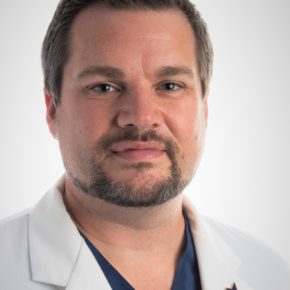
Dr. Smit is a Pediatric Orthopedic Spine Surgeon and a Mid-Career Clinician-Scientist at CHEO. He is an Assistant Professor of Surgery at the University of Ottawa. Dr. Smit’s clinical interests include spinal deformity, complex hip pathologies, bone health, and fracture trauma. He leads our Spine Research Program and his research primarily focuses on the treatment of children with scoliosis, specifically vertebral body tethering. He is a Principal Investigator on over 10 studies at CHEO and the Site Investigator on two Health Canada Device trials for the treatment of Adolescent Idiopathic Scoliosis.
Areas of interest: Spine, Hip, Bone Health
Research Projects
-
The Otto Aufranc Award: Does Hip Arthroscopy at the Time of Periacetabular Osteotomy Improve the Clinical Outcome for the Treatment of Hip Dysplasia? A Multi-Center Randomized Clinical Trial
10/05/2024
This randomized controlled trial examined whether adding hip arthroscopy to periacetabular osteotomy (PAO) improves clinical outcomes for patients with symptomatic hip dysplasia. While all patients experienced significant functional improvement after surgery, there were no meaningful differences in patient‑reported outcomes at one year between those who underwent PAO alone and those who received concurrent arthroscopy. The findings suggest that routine arthroscopy at the time of PAO does not provide added short‑term clinical benefit, though longer‑term follow‑up is needed to assess potential differences over time.
-
How Is Variability in Femoral and Acetabular Version Associated With Presentation Among Young Adults With Hip Pain?
07/05/2024
This study examined how acetabular and femoral version vary in patients undergoing hip preservation surgery and how different femoral version measurement techniques may influence clinical interpretation. The authors found substantial variability in femoral version—nearly twice that of acetabular version—and significant differences between commonly used measurement methods, which can alter what is considered “normal.” These findings highlight the need for standardized measurement approaches, as inconsistent definitions may affect clinical decision‑making and treatment recommendations.
-
Combined hip arthroscopy with periacetabular osteotomy for hip dysplasia: a systematic review
18/04/2024
This systematic review evaluated patient‑reported outcomes following the combined use of hip arthroscopy and periacetabular osteotomy (PAO) for the treatment of developmental hip dysplasia. Across more than 1,000 hips, patient‑reported outcomes improved significantly after surgery, regardless of whether arthroscopy was performed alongside PAO. The study team concludes that while combined procedures are safe and effective, routine use of arthroscopy offers no clear overall benefit, with only limited evidence suggesting added value for highly active patients.
-
Predictors of True Scaphoid Fractures in Children
27/02/2024
This study is a retrospective cohort study of children presenting to a tertiary pediatric hospital with hand or wrist injuries. Patients were grouped based on the presence of a true scaphoid fractures (confirmed on imaging) or those with clinical suspicion of a scaphoid fracture alone (no radiographic evidence of fracture). Demographic and clinical characteristics were compared with univariate and multivariate statistics to identify fracture predictors.
-
Vertebral Body Reshaping after Fractures: An Important Index of Recovery in Glucocorticoid-Treated Children
20/02/2024
This 6‑year study investigated factors associated with spontaneous vertebral body reshaping after vertebral fractures in glucocorticoid‑treated children with leukemia, rheumatic disorders, and nephrotic syndrome. Most children experienced complete reshaping over time; however, higher glucocorticoid exposure, greater fracture burden and severity, and lumbar fractures significantly reduced the likelihood of recovery. These findings suggest that fracture severity and treatment intensity play a key role in long‑term vertebral outcomes following pediatric vertebral fractures.