
Cassandra Kapoor is a clinical research coordinator who leads and oversees studies in the Medical Imaging department at CHEO. One of her key research focuses is on integrating strategies to reduce wait times and avoid anesthesia in pediatrics. She is actively working on several parallel projects and continues to inspire and lead in medical imaging research. Cassandra is passionate about leveraging cutting-edge technology and collaborates with other institutions to advance research and share best practices.

Related News
Research Projects
-
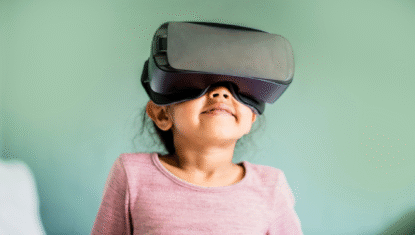
Empowering Children Through Virtual Reality: A New Alternative to General Anesthesia for MRI
17/12/2025
This prospective study evaluated whether a brief virtual reality (VR) simulation could prepare young children for awake MRI scans, reducing the need for general anesthesia. Eighteen children completed a 10‑minute avatar‑guided VR MRI simulation prior to scanning, resulting in successful completion of awake MRIs for all participants and diagnostic‑quality images with minimal motion artifacts. While anxiety levels did not change significantly, caregivers overwhelmingly perceived the intervention as effective, supporting VR as a feasible strategy to facilitate pediatric MRI without sedation.
-
Structural brain differences in school-aged children who are HIV-exposed uninfected
26/08/2025
As antiretroviral therapy has reduced perinatal HIV transmission, understanding the long‑term neurodevelopmental effects of in utero HIV and ART exposure in children who are HIV‑exposed but uninfected (CHEU) has become increasingly important. In this Ontario‑based MRI study of children aged 6–12 years, CHEU showed significantly smaller total brain volumes, thinner cortices, and sex‑specific alterations in regions involved in motor function, language, memory, and emotion compared with unexposed peers. These findings suggest altered neurodevelopmental trajectories—particularly among boys—and underscore the need for early monitoring and targeted support for CHEU.
-
Validation of a shortened MR imaging protocol for pediatric spinal pathology
06/03/2025
Conventional pediatric spine MRI protocols are lengthy and often require sedation; this study evaluated whether a limited MRI protocol could reliably diagnose common pediatric spine conditions. In a retrospective review of children under four years of age, a shortened protocol reduced scan time by 20 minutes while demonstrating high sensitivity and specificity for detecting cerebellar ectopia, syrinx, fatty filum, and spinal dysraphism. These findings support the use of limited spine MRI as an effective screening approach to reduce sedation and imaging burden in selected clinical scenarios.