The Precision Child and Youth Mental Health (PCYMH) Collaboratory uses comprehensive information about the individual ranging from DNA code to the postal code to more precisely identify and treat children and youth with mental health problems. The goal is to detect mental health disorders sooner, provide better treatments tailored to the needs of each child and youth and improve long-term outcomes.
As many as 50% of children and youth do not respond to mental health treatment. The current “one-size-fits all” approach leaves many patients and families suffering. The precision approach to mental health care brings researchers, clinicians, data scientists, patients and caregivers together to design treatment that works for the individual.
Areas of Focus
Data and Research informatics: We are building data and artificial intelligence infrastructure (people and platforms).
Clinical Transformation: Building capacity and literacy in PCYMH to prepare clinical teams and practice infrastructure to deliver care that is better targeted to the need of the individual child or youth.
Research: Supporting research and innovation in PCYMH.
Strategic Priorities 2024-2027
A Unique Research Centre
Sharing ideas, tools, data and skills between patients, caregivers, researchers, data scientists and clinicians to build innovative mental health care tailored to the needs of individual children and youth.
Vision
Improved mental health in the current generation and beyond, designed with the whole child in mind, through collaborative precision mental health research and care.
Mission
Co-design innovative solutions blending research, data and technology to create mental health care tailored for every child and youth.
Nurture teams that translate into real-life PCYMH care.
Conduct impactful PCYMH Research.
Advance the growth of the PCYMH at home and worldwide.
Use technology to deepen the understanding of child and youth mental health.
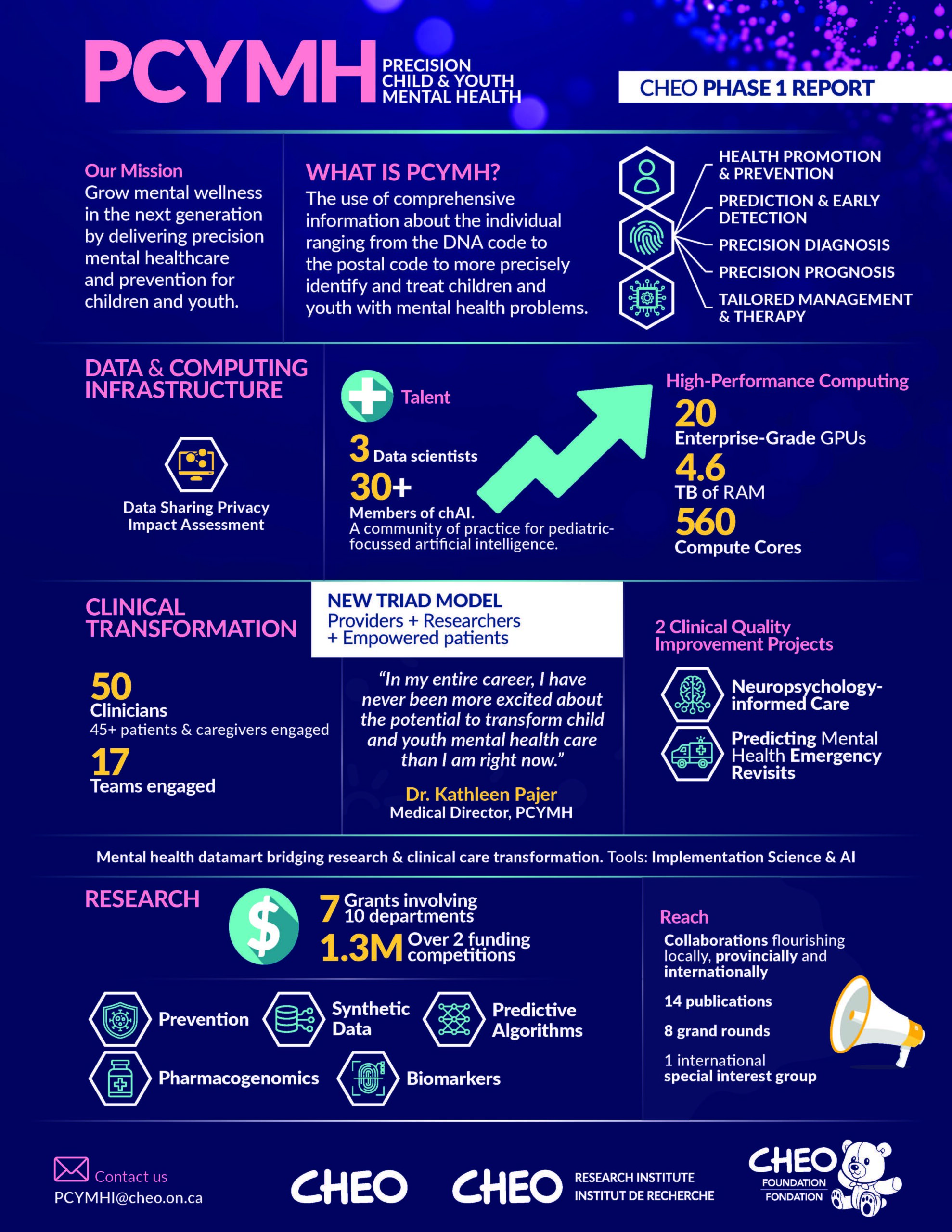
PCYMH Phase 1 Report Infographic Text Version
Interested in learning more? Email us at [email protected].
Related News
-

30/09/2026
New Scientist Maya Amitai explores precision treatments for young people affected by depression
-
08/07/2026
Launching Precision Rewired: A CHEO Research Institute Limited Series Podcast on the future of child and youth mental health
-
27/05/2026
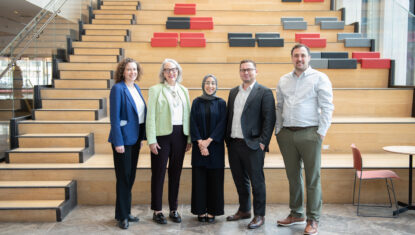
The CHEO Research Institute leads global conversation on precision mental health for children and youth
Research Projects
-
Scoping review of precision child and youth mental health research: dwelling in possibility
09/02/2026
-
Predicting child and adolescent mental health emergency department revisits: a machine-learning approach compared to a clinician-derived baseline
01/12/2025
This study aimed to develop and validate a machine‑learning–based algorithm using electronic health record data to predict child and youth mental health emergency department revisits, and to compare its performance with a clinician‑weighted model. The machine learning approach outperformed the clinician-driven baseline while identifying clinically meaningful predictors such as prior ED visits, medication history, substance use, and outpatient mental health care. These findings demonstrate that interpretable ML models can complement clinical expertise and support improved planning for CYMH emergency care.
-
Risk of neuropsychiatric and related conditions associated with SARS-CoV-2 infection: a difference-in-differences analysis
07/07/2025
-
Using Neuropsychological Profiling to Tailor Mental Health Care for Children and Youth: a Quality Improvement Project to Measure Feasibility
01/05/2025
-
Using Neuropsychological Profiling to Tailor Mental Health Care for Children and Youth: a Quality Improvement Project to Measure Feasibility
01/05/2025
-
Transformer-based deep learning ensemble framework predicts autism spectrum disorder using health administrative and birth registry data.
07/04/2025
Early diagnosis and access to resources, support and therapy are critical for improving long-term outcomes for children with autism spectrum disorder (ASD). ASD is typically detected using a case-finding approach based on symptoms and family history, resulting in many delayed or missed diagnoses.
-
Improving transitions in care for children and youth with mental health concerns: implementation and evaluation of an emergency department mental health clinical pathway
31/03/2025
-
Investigating cross-sectional and longitudinal relationships between brain structure and distinct dimensions of externalizing psychopathology in the ABCD sample
01/02/2025
-
Participatory logic model for a precision child and youth mental health start-up: scoping review, case study, and lessons learned
16/10/2024
This study aimed to support the implementation of precision child and youth mental health (PCYMH) by developing a participatory logic model grounded in implementation science and stakeholder input. Through a scoping review, extensive organizational assessment, and iterative co‑creation with diverse stakeholders, the authors produced the first reported logic model for a PCYMH program. The findings highlight that while participatory logic model development is resource‑intensive, it can accelerate program readiness, strengthen stakeholder engagement, and inform equitable PCYMH system transformation.
-
Using Neuropsychological Profiling to Tailor Mental Health Care for Children and Youth: a Quality Improvement Project to Measure Feasibility
30/09/2024
This quality improvement study aimed to test the feasibility of an innovative care pathway in a pediatric outpatient mental health (OPMH) clinic that integrates neuropsychological profiling into individual psychotherapeutic care for children and youth. The project showed high participation and strong acceptability from patients, caregivers, and clinicians, with no adverse effects or disruptions to outpatient service flow, indicating the pathway is feasible and well‑received. The authors conclude that the next step is to evaluate clinical effectiveness in an experimental trial.
-
Comparing the stability and reproducibility of brain-behavior relationships found using canonical correlation analysis and partial least squares within the ABCD sample
01/07/2024
-
Principles for primary care screening in the context of population health
01/07/2024
-
Screening for depression in children and adolescents in primary care or non-mental health settings: a systematic review update
31/01/2024
-
A stochastic optimization approach for staff scheduling decisions at inpatient units
26/10/2022
-
Peripheral and neural correlates of self-harm in children and adolescents: a scoping review
04/05/2022
-
Our Digital Moment: Innovations and Opportunities in Digital Mental Health Care
30/06/2020
Researchers
-
Maya Amitai
Scientist, CHEO Research Institute
-
Christine Armour
Investigator
-
Nick Barrowman
Associate Scientist, CHEO Research Institute
-
Addo Boafo
Investigator, CHEO Research Institute
-
Mario Cappelli
Investigator, CHEO Research Institute
-
Paula Cloutier
Investigator, CHEO Research Institute
-
Kevin Dick
Investigator, CHEO Research Institute
-
Khaled El Emam
Senior Scientist, CHEO Research Institute Professor, Faculty of Medicine, University of Ottawa
-
Jeff Gilchrist
Associate Scientist, CHEO Research Institute
-
Gary Goldfield
Senior Scientist, CHEO Research Institute
-
Allison Kennedy
Investigator, CHEO Research Institute
-
Andrew Lapointe
Scientist, CHEO Research Institute
-
Hajer Nakua
Scientist, CHEO Research Institute
-
Mark Norris
Investigator, CHEO Research Institute
-
Nicole Obeid
Scientist, CHEO Research Institute
-
Kathleen Pajer
Senior Scientist, CHEO Research Institute
-
Nicole Racine
Scientist, CHEO Research Institute
-
Dhenuka Radhakrishnan
Scientist, CHEO Research Institute
-
Phillippe Robaey
Scientist, CHEO Research Institute
-
Tea Rosic
Scientist CHEO, Research Institute
-
Mark S. Tremblay
Senior Scientist, CHEO Research Institute