
10/11/2025
Ottawa, Ontario — Monday November 10, 2025
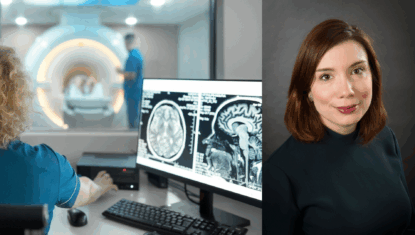
New groundbreaking research will move beyond symptom-only diagnosis to enable personalized treatment for kids
Concussions are among the most common injuries in children and youth, but they remain one of the most complex to diagnose and treat – especially when it comes to their impact on mental health.
New groundbreaking research at CHEO is exploring how to use artificial intelligence and multimodal magnetic resonance imaging (MRI) to make pediatric concussion care more precise, personalized, and proactive.
“We know no two kids are alike. Every concussion experience and recovery is as unique as they are, which makes diagnosing and predicting their recovery trajectory challenging,” said Dr. Andrée-Anne Ledoux, Scientist at the CHEO Research Institute and Assistant Professor at the University of Ottawa. “By harnessing AI to analyze large datasets, paired with advanced neuroimaging, we can identify biosignatures to classify concussion subtypes and tailor treatments to individual needs – ensuring care supports both physical recovery and mental health.”
The MAP edge: Combining AI and MRI
Called the Multimodal Imaging and Advanced Informatics for Excellence in Pediatric Concussion Care (MAP) project, this work is made possible through the Precision Child and Youth Mental Health Collaboratory Discovery Grant.
The MAP project will analyze data from nearly 1,000 children aged eight to 18, including those with concussions and orthopedic injuries. Researchers use multimodal MRI to capture detailed information about brain structure and function. Unlike traditional imaging methods that average signals and mask individual differences, this approach preserves unique patterns.
AI-driven clustering and predictive modeling then analyze these patterns alongside psychosocial data to identify biosignatures, which are distinct combinations of brain and behavioral markers. These biosignatures allow clinicians to:
- Classify concussion subtypes for more accurate diagnosis.
- Identify children at risk for long-term symptoms such as emotional dysregulation or balance issues.
- Develop predictive algorithms that could be used in clinical settings, including emergency rooms, to guide personalized care.
A mental health approach to concussion care
Emerging research shows that even a single concussion can significantly increase the risk of mental health challenges. For children and youth, whose brains and bodies are still developing, this risk is even greater. Factors such as pre-existing mental health conditions, socioeconomic status, and how they suffered the injury – whether from sports, a fall, or an accident – can all influence recovery. These complexities underscore the need for a personalized approach.
CHEO Research Institute teams leading the way
Dr. Ledoux leads this work in collaboration with Dr. Khaled El Emam, Senior Scientist at CHEO Research Institute and Director of the Ottawa Medical Artificial Intelligence Research Institute (OMARI) at the University of Ottawa. Together with their teams, their expertise in pediatric concussion research and AI innovation positions CHEO at the forefront of transforming concussion care.
The MAP project is a significant step toward individualized concussion care that considers the whole child, including their mental health, and has the potential to improve diagnostic accuracy, enhance treatment planning, and reduce the long-term impact of concussions on a child’s health and well-being.