
Kathleen Pajer, MD, MPH, is a Professor of Psychiatry and formerly served as Chair of the Department of Psychiatry at the University of Ottawa and Chief of Psychiatry at CHEO. She currently serves as the Director of the CHEO Precision Child and Youth Mental Health (PCYMH) Collaboratory, supported by generous donor funding in a partnership with SickKids. Additionally, she is the Clinical and Scientific Director of Project ECHO Ontario: Child and Youth Mental Health.
Dr. Pajer spent the majority of her career in the United States as a clinician scientist, focusing on stress response system function in adolescent girls with behavioral disturbances. Since her recruitment to Canada in 2011 to Dalhousie University and in 2014 to the University of Ottawa, Dr. Pajer has taken on leadership roles in medical, clinical, and research domains. Her scientific focus has since shifted transforming the child and youth mental healthcare system.
She has received numerous grants and awards for her work, including the 2024 CHEO Research Institute’s Osmond Impact Award, recognizing individuals who have significantly advanced the CHEO Research Institute’s growth over the past year.

Related News
-

04/02/2026
CHEO research shows how AI could reduce emergency department visits for mental health care
-
19/11/2025
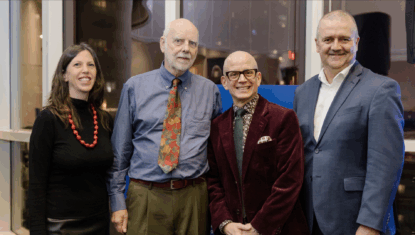
$35 million gift advances precision mental health care at CHEO and SickKids to predict better, diagnose faster and treat smarter
-

22/07/2025
AI predictive screening shows potential to provide earlier and more accurate detection of autism spectrum disorder
Research Projects
-
Predicting child and adolescent mental health emergency department revisits: a machine-learning approach compared to a clinician-derived baseline
01/12/2025
This study aimed to develop and validate a machine‑learning–based algorithm using electronic health record data to predict child and youth mental health emergency department revisits, and to compare its performance with a clinician‑weighted model. The machine learning approach outperformed the clinician-driven baseline while identifying clinically meaningful predictors such as prior ED visits, medication history, substance use, and outpatient mental health care. These findings demonstrate that interpretable ML models can complement clinical expertise and support improved planning for CYMH emergency care.
-
Dyadic attachment-based therapies for infants and young children with mental health problems: a scoping review
12/11/2025
Early child-caregiver attachment is foundational to mental health (MH). While prevention efforts often aim to improve attachment quality, clinicians frequently encounter infants and young children already exhibiting clinical symptoms of MH disorders. A comprehensive summary of attachment-based dyadic interventions for this population is lacking. This scoping review aims to address this gap.
-
Participatory logic model for a precision child and youth mental health start-up: scoping review, case study, and lessons learned
16/10/2024
This study aimed to support the implementation of precision child and youth mental health (PCYMH) by developing a participatory logic model grounded in implementation science and stakeholder input. Through a scoping review, extensive organizational assessment, and iterative co‑creation with diverse stakeholders, the authors produced the first reported logic model for a PCYMH program. The findings highlight that while participatory logic model development is resource‑intensive, it can accelerate program readiness, strengthen stakeholder engagement, and inform equitable PCYMH system transformation.
-
Using Neuropsychological Profiling to Tailor Mental Health Care for Children and Youth: a Quality Improvement Project to Measure Feasibility
30/09/2024
This quality improvement study aimed to test the feasibility of an innovative care pathway in a pediatric outpatient mental health (OPMH) clinic that integrates neuropsychological profiling into individual psychotherapeutic care for children and youth. The project showed high participation and strong acceptability from patients, caregivers, and clinicians, with no adverse effects or disruptions to outpatient service flow, indicating the pathway is feasible and well‑received. The authors conclude that the next step is to evaluate clinical effectiveness in an experimental trial.
-
Impact of a publicly-funded pharmacare program on prescription stimulant use among children and youth: A population-based observational natural experiment.
27/10/2023
Prescription drug coverage is a less well-studied determinant of medication access among individuals with ADHD. In one US study, children without insurance were less likely to be prescribed stimulants than those with private or public insurance. Similarly, a separate US study found that most stimulant prescriptions were paid through commercial insurance, with copayments required for nearly two-thirds of prescriptions dispensed. Therefore, disparities in insurance status may be an important source of inequity in treatment for children and youth with ADHD, favouring individuals with private insurance and the financial resources to cover out-of-pocket costs. This assertion is supported by findings from research associating higher income with a greater likelihood of stimulant treatment and lower treatment rates in children with ADHD from low-income families despite being at least as likely to meet the diagnostic criteria for this condition as high-income children.