
31/08/2026
Ottawa, Ontario — Monday August 31, 2026
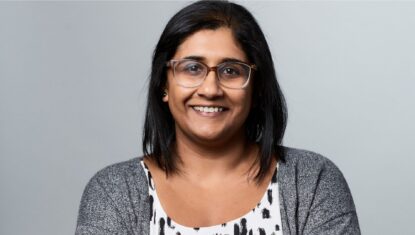
For children living with Duchenne muscular dystrophy (DMD), progressive muscle damage leads to a gradual loss of strength and function. For Dr. Neena Lala-Tabbert, understanding how muscles repair themselves is key to developing better treatments for kids with DMD.
Dr. Lala-Tabbert was recently appointed as a Scientist at the CHEO Research Institute in conjunction with a successful Canadian Institutes of Health Research (CIHR) Research Excellence, Diversity and Independence (REDI) Early Career Transition Award – a program designed to support Canada capitalize on the full extent of its tremendous scientific talent. Through its two-phase model, which begins with mentored career development for post-doctoral fellows and is followed by support to establish and sustain an independent research program, REDI develops the next generation of health research leaders.
Dr. Lala-Tabbert’s research focuses on how signaling pathways influence muscle stem cell function, regeneration, and disease progression. By combining molecular biology, genetics, and preclinical models, her research aims to identify new therapeutic strategies that improve muscle repair while preserving long-term regenerative capacity. She is particularly interested in understanding how different cellular signaling pathways regulate muscle development and regeneration, with the goal of uncovering new therapeutic targets for DMD.
“My research is driven by the opportunity to translate fundamental discoveries in muscle biology into therapies that can improve the lives of children living with Duchenne muscular dystrophy,” said Dr. Lala-Tabbert. “By better understanding the signals that regulate muscle regeneration, we hope to identify new approaches that help muscles repair themselves more effectively and maintain their function over time.”
Since joining the CHEO Research Institute in 2017 as the inaugural Hans Heick Fellow, Dr. Lala-Tabbert has earned several nationally and internationally competitive awards in support of her research, including a CIHR fellowship to investigate muscle atrophy and a Muscular Dystrophy Association Development Grant for her work on potential therapeutic approaches for Duchenne muscular dystrophy during her postdoctoral training in the laboratory of Dr. Robert Korneluk.
Dr. Lala-Tabbert’s research program as a Scientist at the CHEO Research Institute will continue seek to translate fundamental discoveries in muscle biology into therapies that can improve the lives of children living with DMD.